

Part 1 covered building your network and reaching out directly to the companies doing the hiring. This is Part 2: specialist recruiters, the professional groups actually worth your time, and where to start if you’re building skills rather than experience yet.
Specialist recruiters are worth more than generic ones
A recruiter who actually works this niche is worth more than a dozen generalists. They already know which companies are hiring for blade positions specifically, not renewables broadly, what a competitive package looks like at your experience level, and often which roles haven’t reached a job board yet because they’re filling them through their own network first. A good one will also tell you honestly if your CV isn’t ready, which is more useful than a rejection with no explanation attached.
The relationship matters more than the first placement. A recruiter who’s placed you once and seen you do the job well will call you directly next time something fits, sometimes before it’s gone anywhere near a job board. That only happens if you stay in touch between roles, not just when you’re looking again.
Not every professional group is worth your time
The useful ones tend to be built around a specific qualification or trade, GWO training networks, IRATA and SPRAT member communities, national and regional wind energy associations, rather than general renewables groups where blade service gets lost in a much wider conversation.
Being active matters more than being a member. A profile that shows up in discussions, asks a decent question, shares something relevant, gets noticed by the people doing the hiring in a way a silent membership never will. And most of these groups have people in them who’ve been doing this for twenty years and will answer a genuine question if you ask it properly.
Certifications that actually open doors
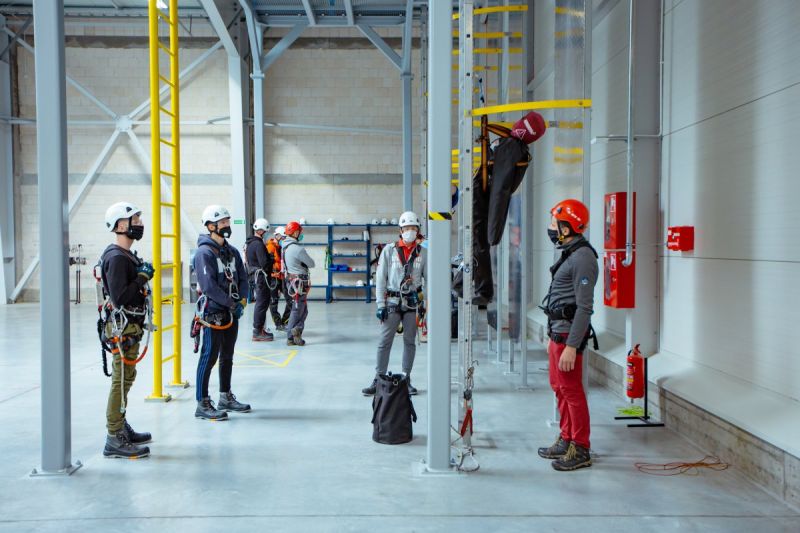
If you’re starting from outside the industry, GWO Basic Safety Training is the entry point for onshore roles, and BOSIET if you’re aiming offshore, they’re not interchangeable, so check which one your target role actually needs before you book anything. Working at height is the other non-negotiable, through IRATA or SPRAT if rope access is the route in, or GWO’s working at height module if it isn’t.
Beyond the certifications, the technical knowledge matters too, understanding how a blade is actually built, what the common failure modes are, why a Category 3 finding gets treated differently to a Category 5. That’s the kind of thing you can start learning before anyone’s paid you to be on a blade, through trade publications, technical webinars, and reading what the companies you’re targeting actually publish about their own work.
None of this happens in one application or one conversation. Build the network, get the certifications sorted, stay visible to the people doing the hiring, and the roles tend to find you as much as the other way round.
That’s the two parts. If you’re working through this yourself, message me, I read every one.
← Back to Field Notes