Without structured documentation, blade service contractors face financial, legal, and commercial risks that can surface months or years after the work is done. Collabaro ensures every repair meets client standards and regulatory requirements, with the evidence to prove it.
A client disputes a line item on your invoice, hours that don't reconcile, a repair they claim wasn't completed to a set of work instructions, or scope they say was never agreed. It's the most common financial risk blade service contractors face, and it directly hits cash flow.
What makes it worse is the timing. With 90 or 120-day payment terms, often stretched further, a repudiation can land months after the campaign has finished. By then, you've already paid your technicians (sub-contractors), your rope access teams, your accommodation and transport. The cost is sunk. And you can't send a team back to a turbine that's been returned to service to recreate evidence that should have been captured at the time.
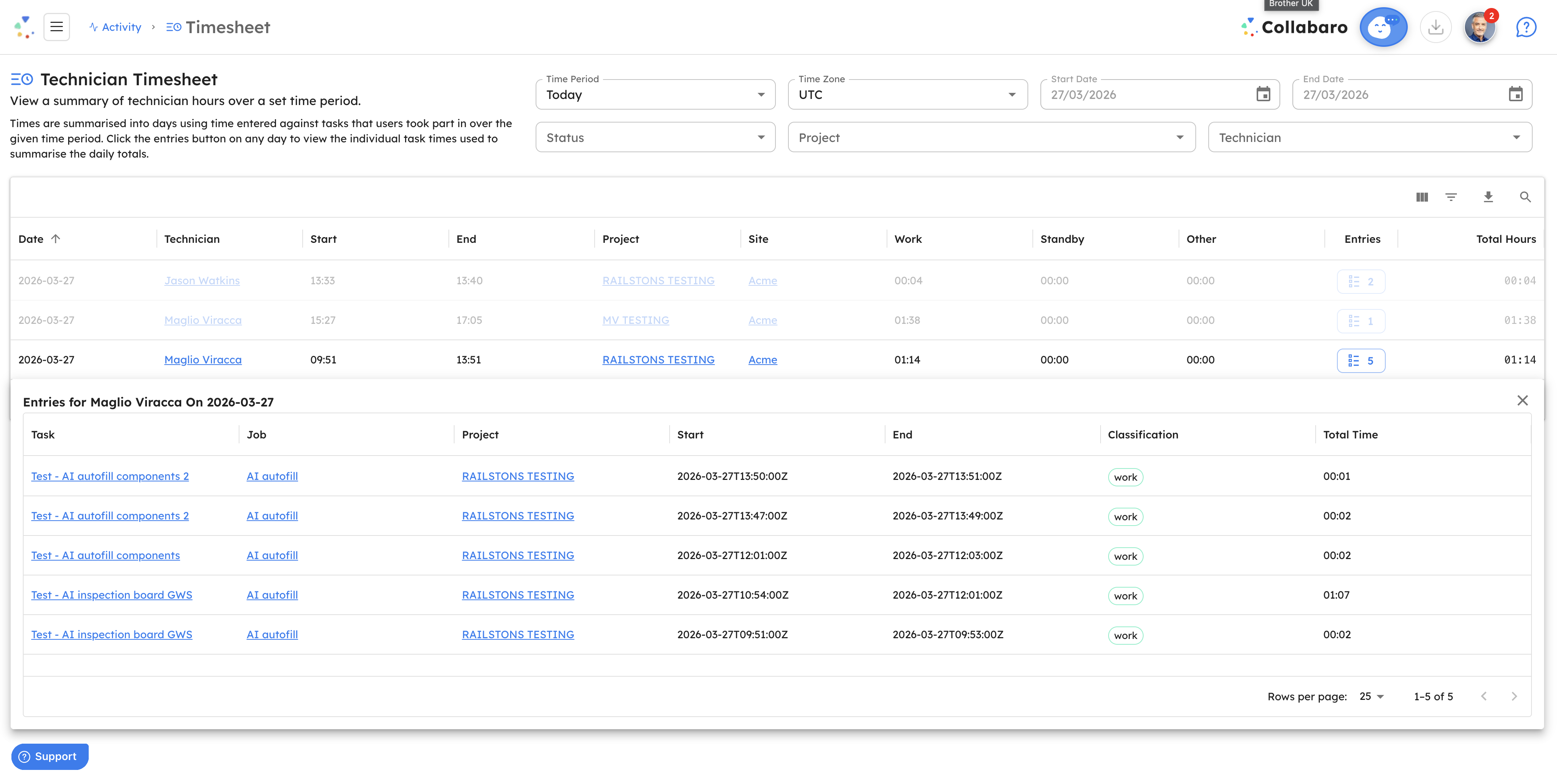
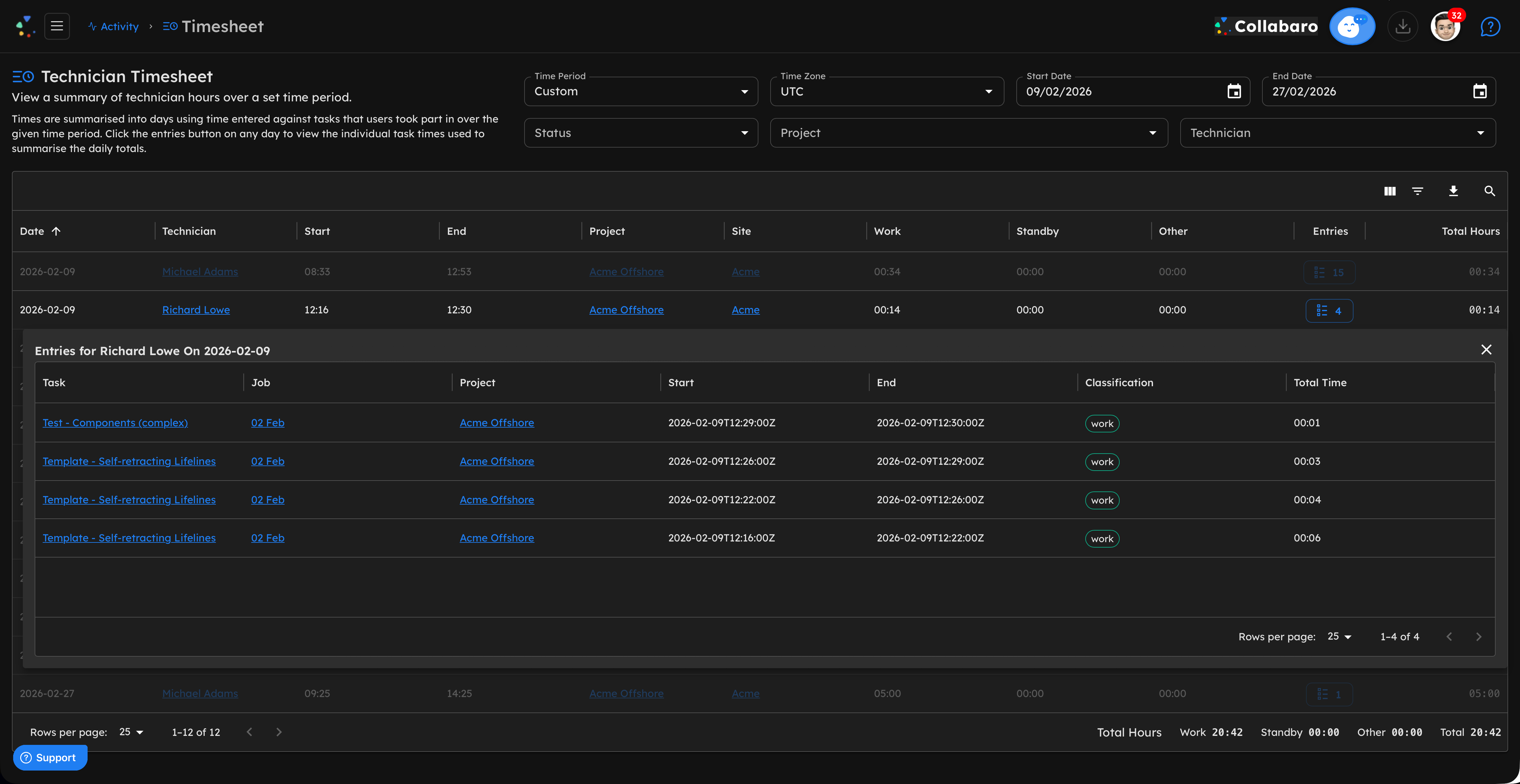
Technicians clock in and out directly from Collabaro Field. Every entry is verified with GPS coordinates, automatically mapped to the correct pay rate, project code, and cost centre. When a client queries an invoice three months later, you have timestamped, location-verified records tied to every hour billed.
A blade component fails months or years after your team last worked on it. There's structural damage, or worse, an injury. The Health and Safety Executive opens an investigation, and the contractor who last inspected or repaired that blade is the first call they make.
At that point, the question isn't whether your team did the job properly, it's whether you can prove it. HSE investigators need to see that your inspection followed a defined process, that the correct repair procedures were applied, and that qualified personnel signed off at each stage. They'll want to see completed toolbox talks, signed risk assessments, PPE checklists, and rope access or MEWP pre-use inspection records, all tied to the specific turbine, date, and team. Timestamped photographic evidence, structured checklists, and a complete audit trail aren't optional, they're your defence.
In the most serious cases, directors have been held personally liable and sentenced to imprisonment for failing to establish or enforce adequate health and safety procedures. It's rare, but the precedent exists, and it underlines that this isn't just a corporate risk, it's a personal one.
Without adequate records, you're relying on the memory of technicians who may have moved on, paper forms that may have been lost, and a filing system that was never built to withstand legal scrutiny.
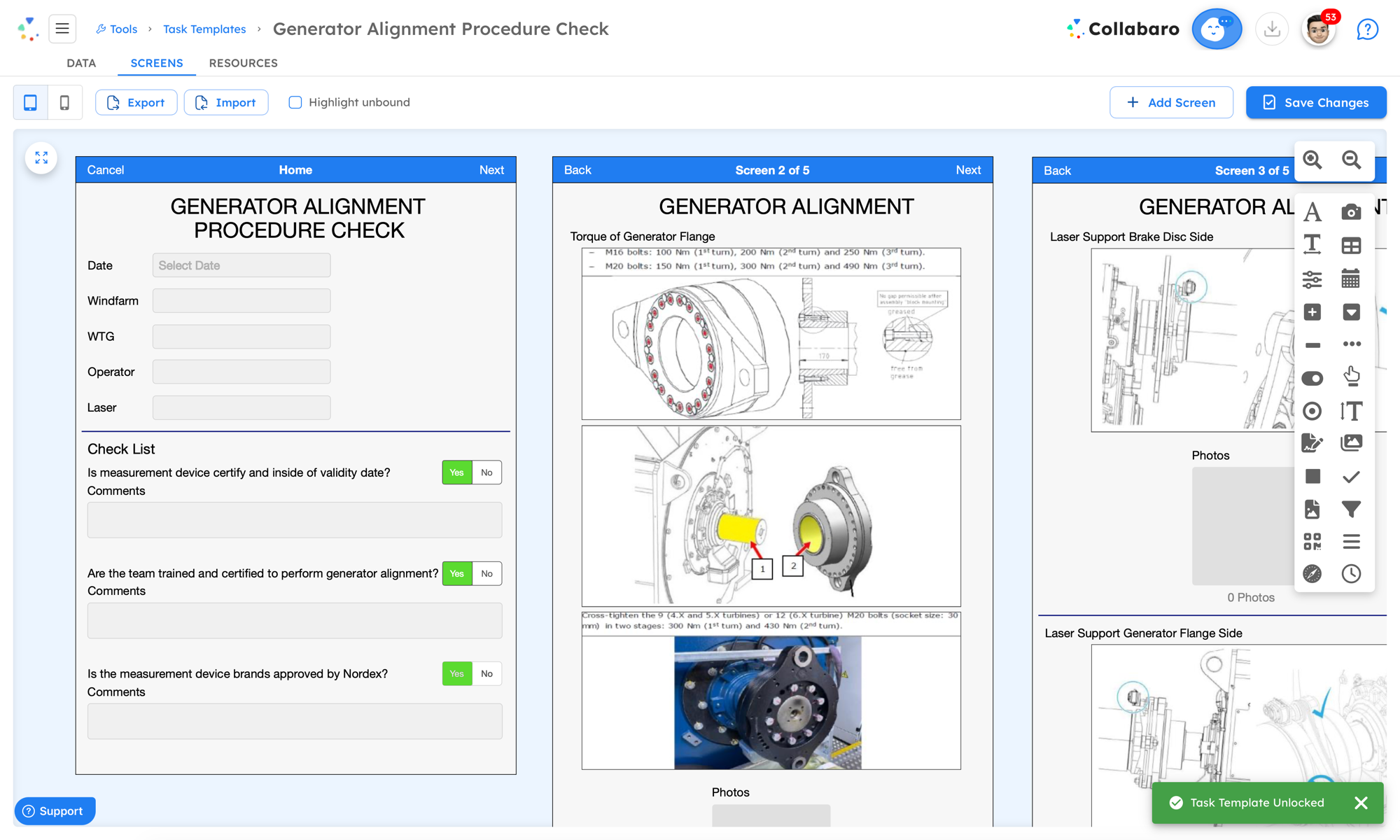
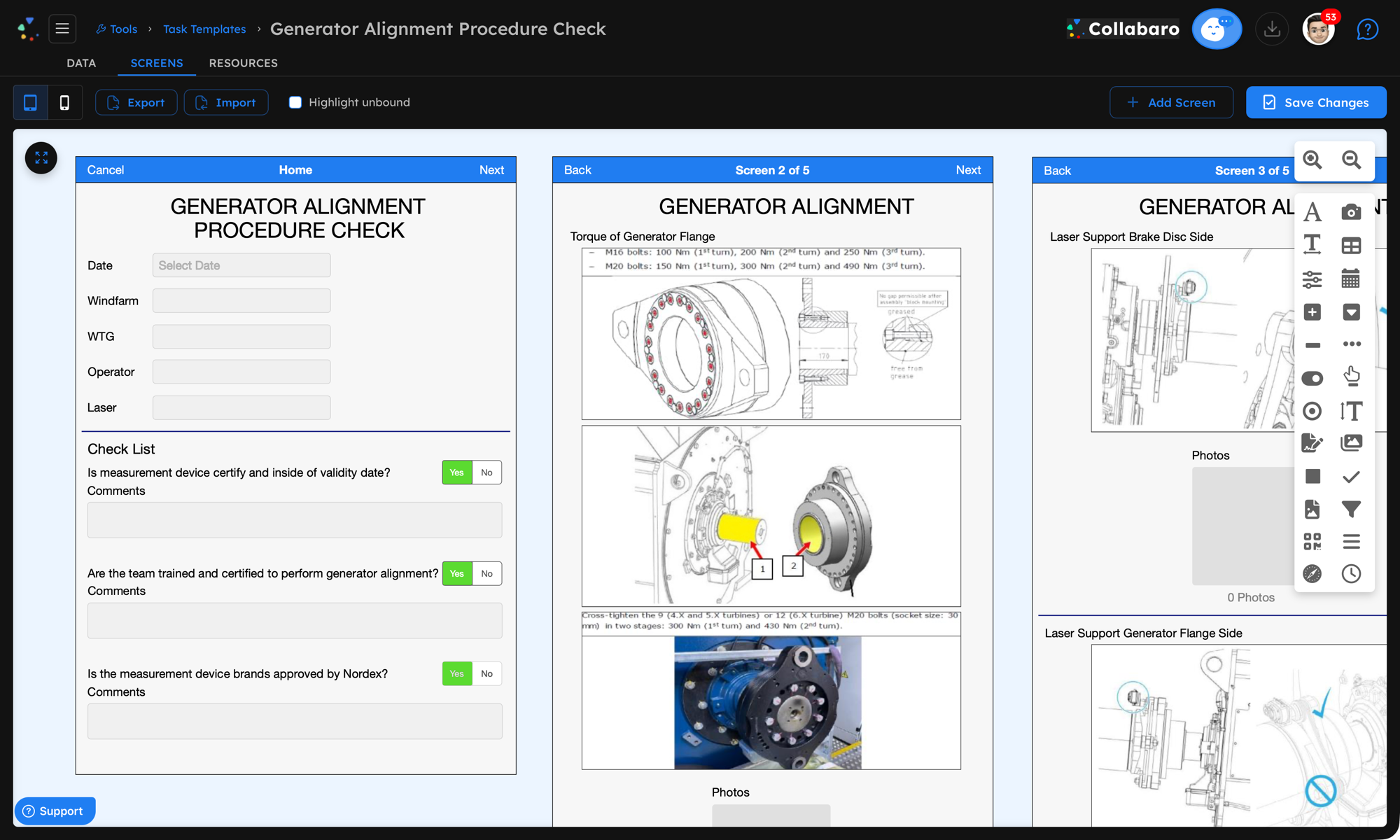
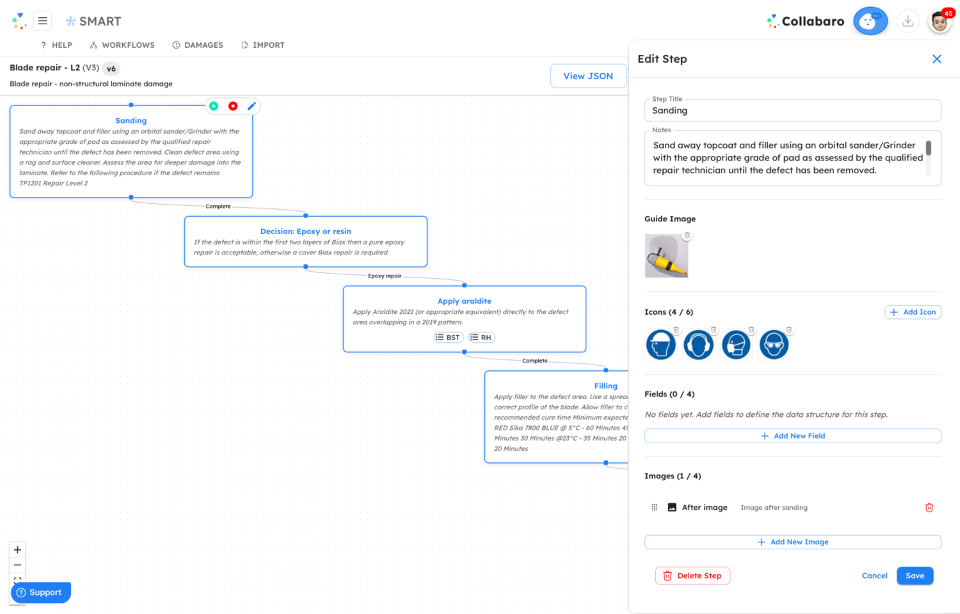
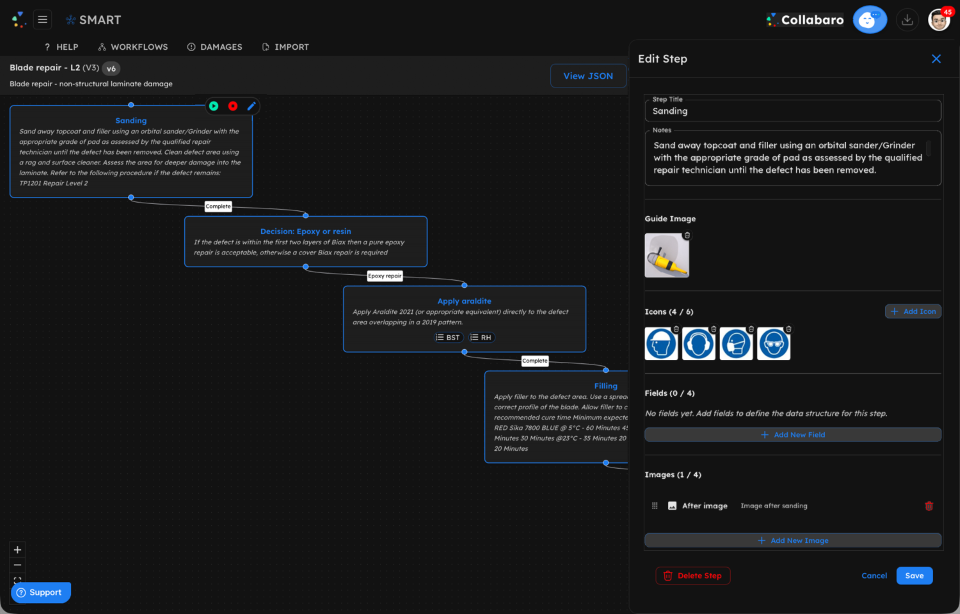
Build structured checklists for every task type and turbine model, from Vestas V110s to Siemens Gamesa SG 14-236 DDs. Technicians complete each step in order, with mandatory fields and photo uploads ensuring nothing is missed. Every completed checklist is stored as an immutable, timestamped record tied to the specific technician, turbine, and date.
A repair your team completed six months ago fails. The asset owner or OEM comes back to you with a warranty claim, the leading edge protection has peeled, a shell repair hasn't held, or a lightning receptor replacement has failed. They want it fixed at your cost, or they want compensation.
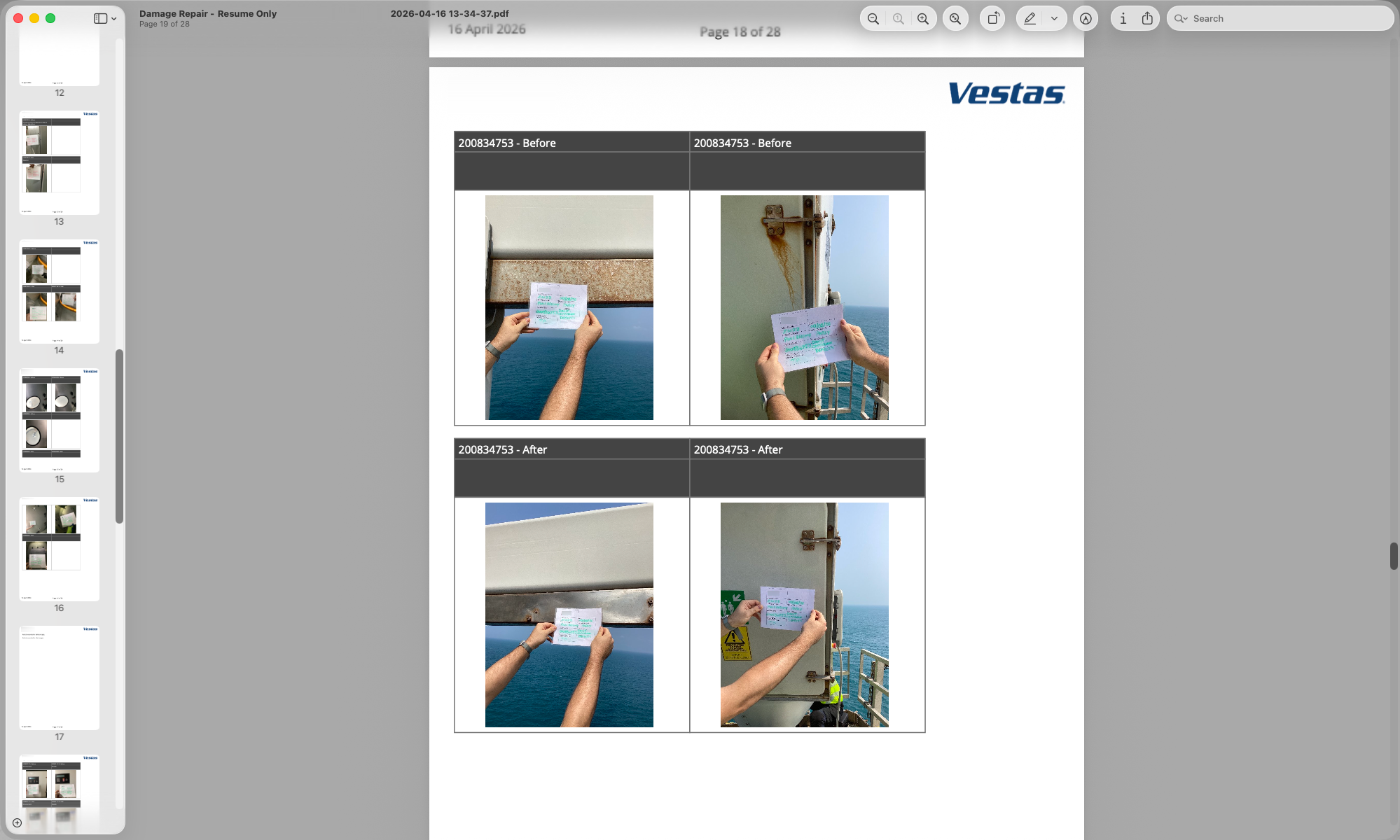
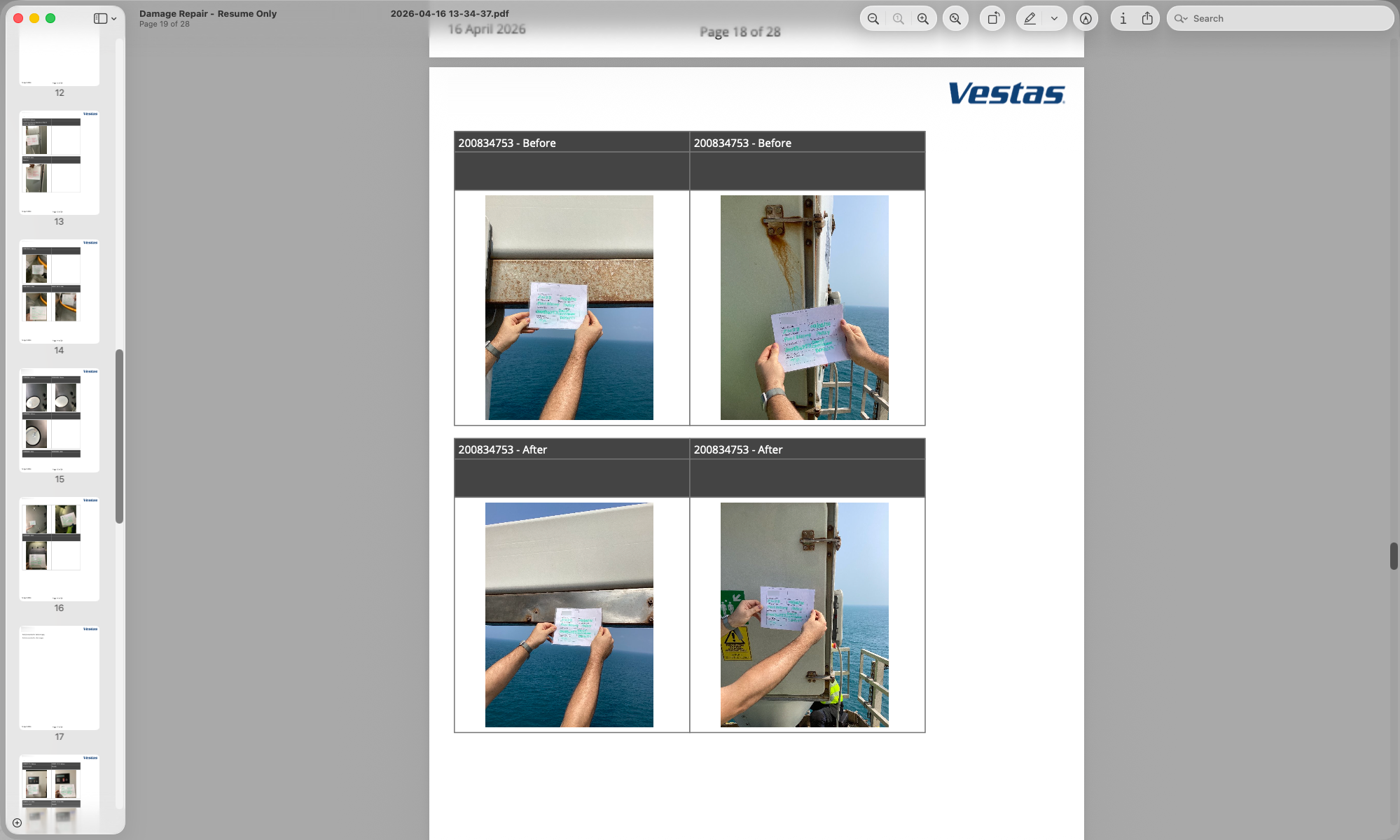
Your only defence is documentation that proves the original repair was carried out to the agreed work instructions, using the correct materials, in the right conditions. That means material batch numbers, mixing ratios, cure times, ambient temperature and humidity readings, and before-and-after photographic evidence at each stage. If any of that is missing or incomplete, you have no basis to challenge the claim, even if your team did everything right.
The problem compounds when warranty periods run 12 to 24 months. By the time a claim lands, the campaign is long finished, the technicians may be working for someone else, and the only thing standing between you and a six-figure liability is the quality of your records.
Every action in Collabaro is logged with a timestamp, user identity, and location. Photographic evidence is captured directly within the task flow, creating an unbroken chain of accountability from first inspection through to completed repair.
Your professional indemnity and public liability insurance exists to protect you when things go wrong. But insurers don't pay out on good faith, they pay out on evidence. If a claim arises from a blade failure, a site incident, or third-party damage, your insurer will scrutinise your documentation before deciding whether to cover it.
If you can't demonstrate that your team followed the correct procedures, used qualified personnel, and adhered to the agreed scope of work, your insurer has grounds to reduce or refuse the claim entirely. For rope access and offshore operations, where the financial exposure from a single incident can be significant, this is a risk that can threaten the viability of the business.
The irony is that most contractors are paying substantial premiums for cover that only works if their documentation is watertight. Without structured, traceable records captured at the point of work, you're paying for a safety net with holes in it.
SmartTask workflows break complex repairs into defined steps with conditional logic, mandatory sign-offs, and automatic escalation. Every step is recorded with who completed it, when, and what evidence was captured. If a technician flags an issue at step 3, the workflow automatically escalates to a supervisor before proceeding. Your insurer sees a system that enforces procedure, not one that relies on it.
OEMs and asset owners are increasingly requiring digital evidence trails, structured reporting, and demonstrable quality management as part of their framework agreements and tender processes. It's no longer enough to say you do good work, you need to prove it, historically, across every campaign you've delivered.
When you're bidding for a multi-year service contract and the evaluation panel asks for evidence of your inspection and repair quality, your response is only as strong as your records. Contractors who can export structured compliance data, photographic evidence packs, and complete audit trails from previous campaigns have a tangible advantage over those submitting spreadsheets and scanned paper forms.
The risk isn't just losing a single tender, it's being quietly removed from the shortlist altogether. In a sector where the major OEMs work with a small pool of approved contractors, a reputation for poor documentation can close doors before you even know they were open.
Book a demo and see how Collabaro captures the evidence you need to defend every invoice, every warranty claim, and every audit.