Four peer-reviewed papers. One university partnership. Years ahead of the market.
In 2019, Railston & Co Ltd sponsored a PhD research programme at Loughborough University, partnering directly with the Department of Computer Science to explore how vision AI and deep learning could transform wind turbine blade defect detection.
At that time, the wind energy sector was not talking about AI for blade inspection. Most contractors relied entirely on manual reporting, PDF-based inspection records, and spreadsheets. We saw an opportunity to apply computer vision and machine learning to a problem that the industry hadn’t yet recognised as solvable.
Over the following years, this collaboration produced four peer-reviewed research papers, a novel deep learning pipeline, a defect characterisation system, and two open-source toolkits, all built on real blade inspection data from our own operations.
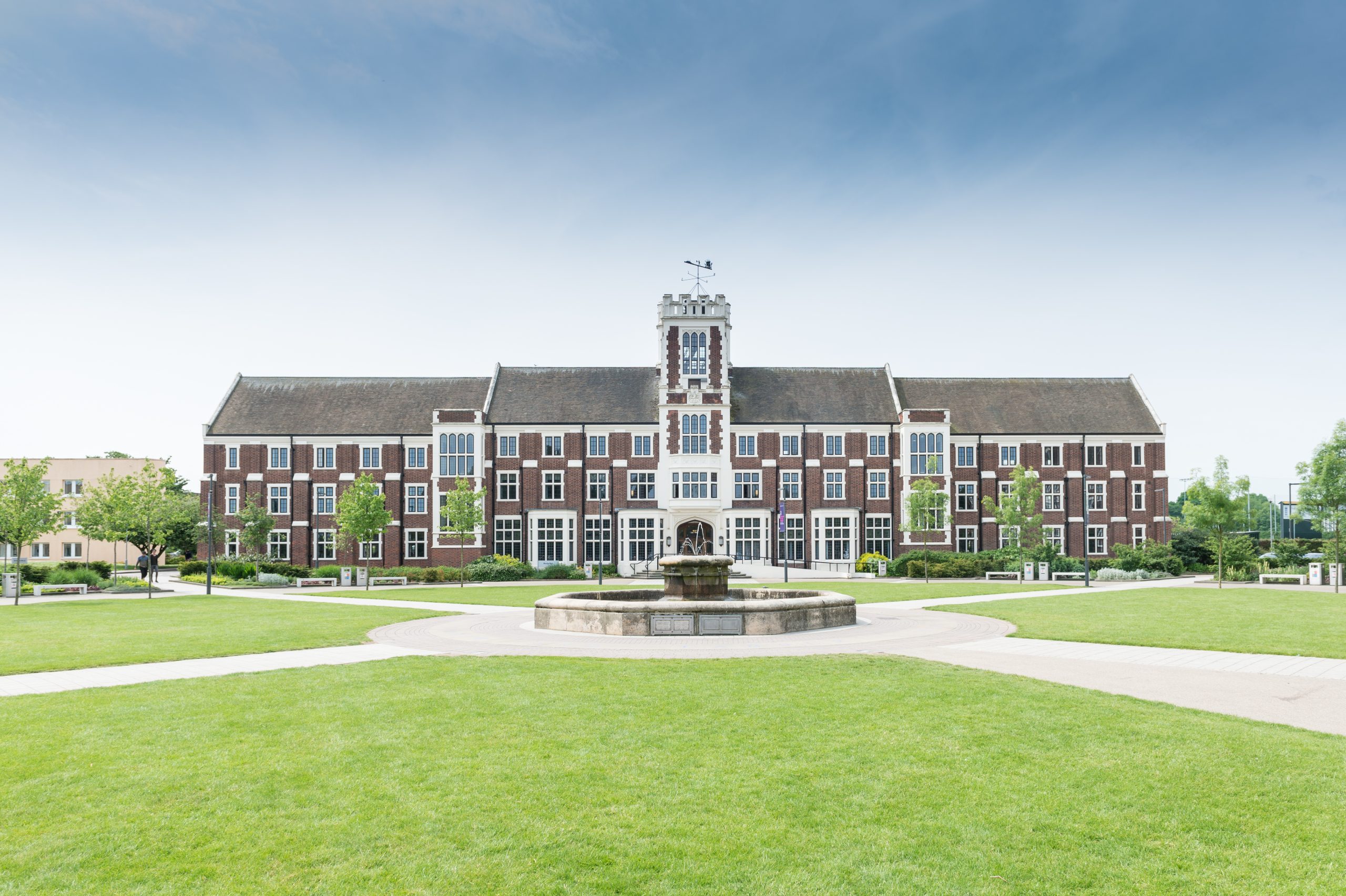
Railston & Co Ltd sponsors a PhD programme at Loughborough University’s School of Science, focused on AI-based defect detection for wind turbine blades. Jason Watkins, CEO, is directly involved in the research as an industrial co-author.
First paper published in the Journal of Imaging. Introduces a custom deep learning pipeline for blade defect detection that outperforms YOLOv3 and YOLOv4, achieving 86.74% accuracy. Trained on real inspection data provided by Railston & Co.
DefChars (Defect Characteristics) framework, AI-Reasoner for explainable AI, and ForestMonkey open-source toolkit all published. Research extends beyond wind energy to healthcare and industrial applications, demonstrating cross-sector applicability.
The deep understanding of AI gained through this research programme directly informs Collabaro’s product development, including AI-powered damage extraction from inspection reports, REST API integrations with specialist drone and inspection platforms, and an internal MCP server used for ongoing AI research and experimentation.
Co-authored by Railston & Co Ltd with Loughborough University’s Department of Computer Science and Department of Physics.
Journal of Imaging, 2021, 7(3), 46
Compares YOLOv3, YOLOv4, and Mask R-CNN for blade defect detection. Introduces the IE-MRCNN pipeline achieving 86.74% mean weighted accuracy, outperforming all alternatives. Proposes three new evaluation measures purpose-built for defect detection. Trained on real blade inspection images provided by Railston & Co.
Journal of Imaging, 2023 (submitted)
Introduces DefChars: 38 morphological features that characterise defects by colour, shape, and meta properties. Achieves 80% mean average precision across four datasets including wind turbine blade defects, medical CT scans, and industrial heatsink images. Proves the approach works cross-industry.
Conference paper
Introduces ForestMonkey, an open-source Python toolkit that explains why an AI model made its predictions. Uses ensemble decision trees and DefChars to generate visualised charts and text-based improvement suggestions. Applied to four AI models across industrial and medical datasets.
Conference paper • Funded by Loughborough University with industrial support from Railston & Co Ltd
Proposes the AI-Reasoner framework, a system that extracts DefChars from images and uses decision trees to reason about AI predictions. Introduces 38 defect characteristics covering colour, shape complexity, and meta information. Tested on 366 wind turbine blade defect images achieving 84.15% detection and 80.60% classification accuracy.
The papers gave us a deep technical foundation. What came next was applying those insights to real operational problems faced by blade service contractors every day.
Our applied research gave us the domain knowledge to work effectively with multimodal language models from an early stage. That accumulated knowledge is what enables our damage extraction capability to work across any report format — CSV, XLSX, PDF, or Word. Regardless of which inspection platform or drone provider was used, Collabaro can extract and structure rich damage data automatically, eliminating manual re-entry, reducing errors, and cutting the time needed to prepare a project tender from hours to minutes.
Understanding how to extract and classify structured damage data enabled us to build a workflow that turns raw inspection output into projects, jobs, and tasks in Collabaro automatically. What previously required a project manager to spend days manually creating work orders from an inspection report can now happen in minutes, giving contractors a faster path from inspection to mobilisation.
Board Logging and Automated Data Extraction
Transferring findings from paper inspection boards is one of the most time-consuming tasks in blade service. Collabaro Field lets technicians photograph a completed board and have the data extracted automatically.
Every data point comes back with a traffic-light confidence score, so technicians know at a glance which entries to check and in what order. The result: less time on a phone at height, fewer transcription errors, and more time on the blade.
Our research proved that AI can detect and classify blade defects with high accuracy, and we built the frameworks to explain why an AI model reaches its conclusions. This is a critical requirement for safety-critical industries like wind energy.
AI research has since accelerated at a pace that makes it uneconomical for any small company to build and maintain custom vision models in-house. We recognised this early. Rather than trying to compete as an AI company, we applied our deep understanding of the technology where it delivers real commercial value.
Today, Collabaro’s AI capabilities are integrated directly into operational workflows, not bolted on as a separate module. Our REST API integrates with specialist drone and inspection platforms like Perceptual Robotics. And our understanding of defect characterisation, directly informed by this research, shapes how we structure, filter, and present damage data to our users.
The research gave us something no amount of marketing can buy: genuine expertise in how AI applies to wind turbine blade inspection. That expertise is embedded in every feature we build.
Book a demo and we will show you how Collabaro extracts, structures, and acts on blade damage data.